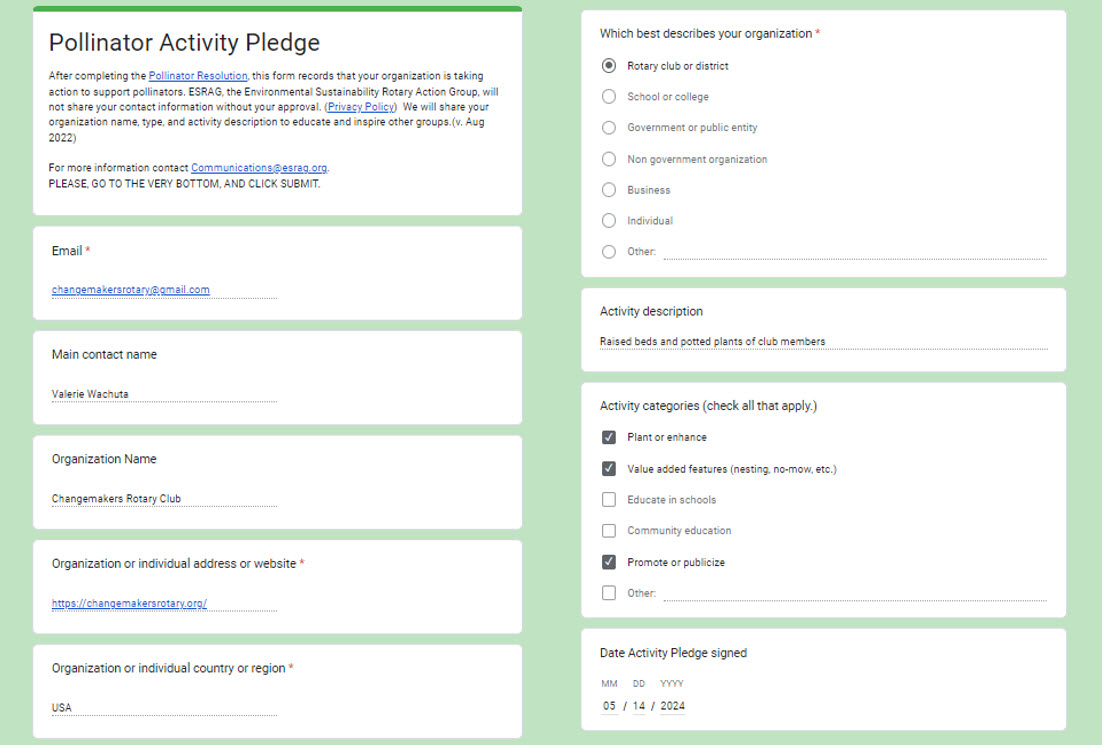
 On May 14th, Changemakers signed the Operation Pollination Pollinator Resolution and Pollinator Activity Pledge. These are through ESRAG - The Environment and Sustainability Rotary Action Group.
We declare that it is our goal to support the goals of Operation Pollination, and to collaboratively and strategically protect and enhance pollinator species and their habitat on public and private lands throughout our geographic area.
Additionally, we pledge to maintain flower beds and potted plants on our private lands. Our activity categories include 1) Plant or enhance 2) Value added features (nesting, no-mow etc.) and 3) Promote or publicize.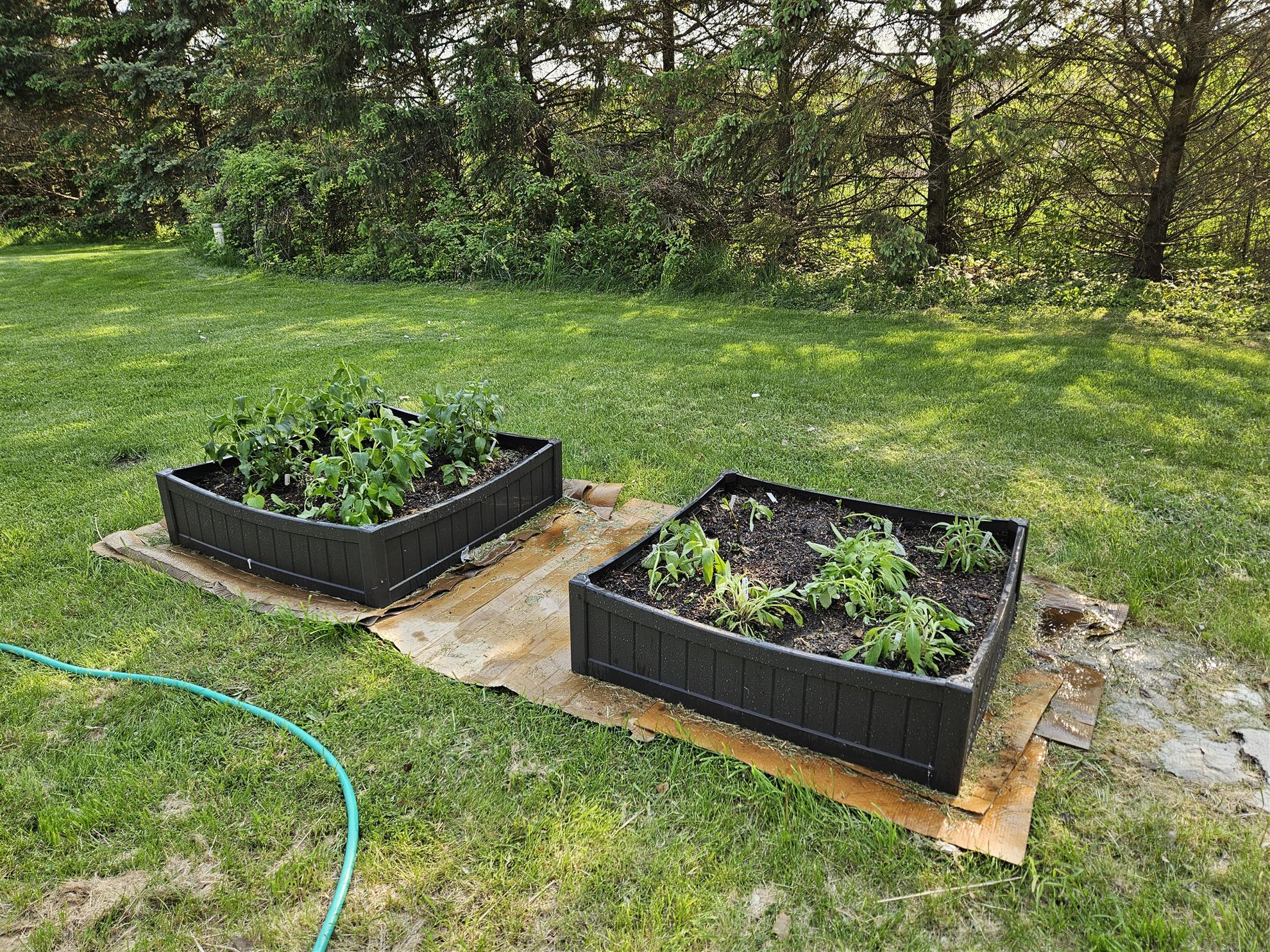
We're off and running with the project. Several members are already growing pollinator plants. Some of us have no-mow and nesting areas on our lands.
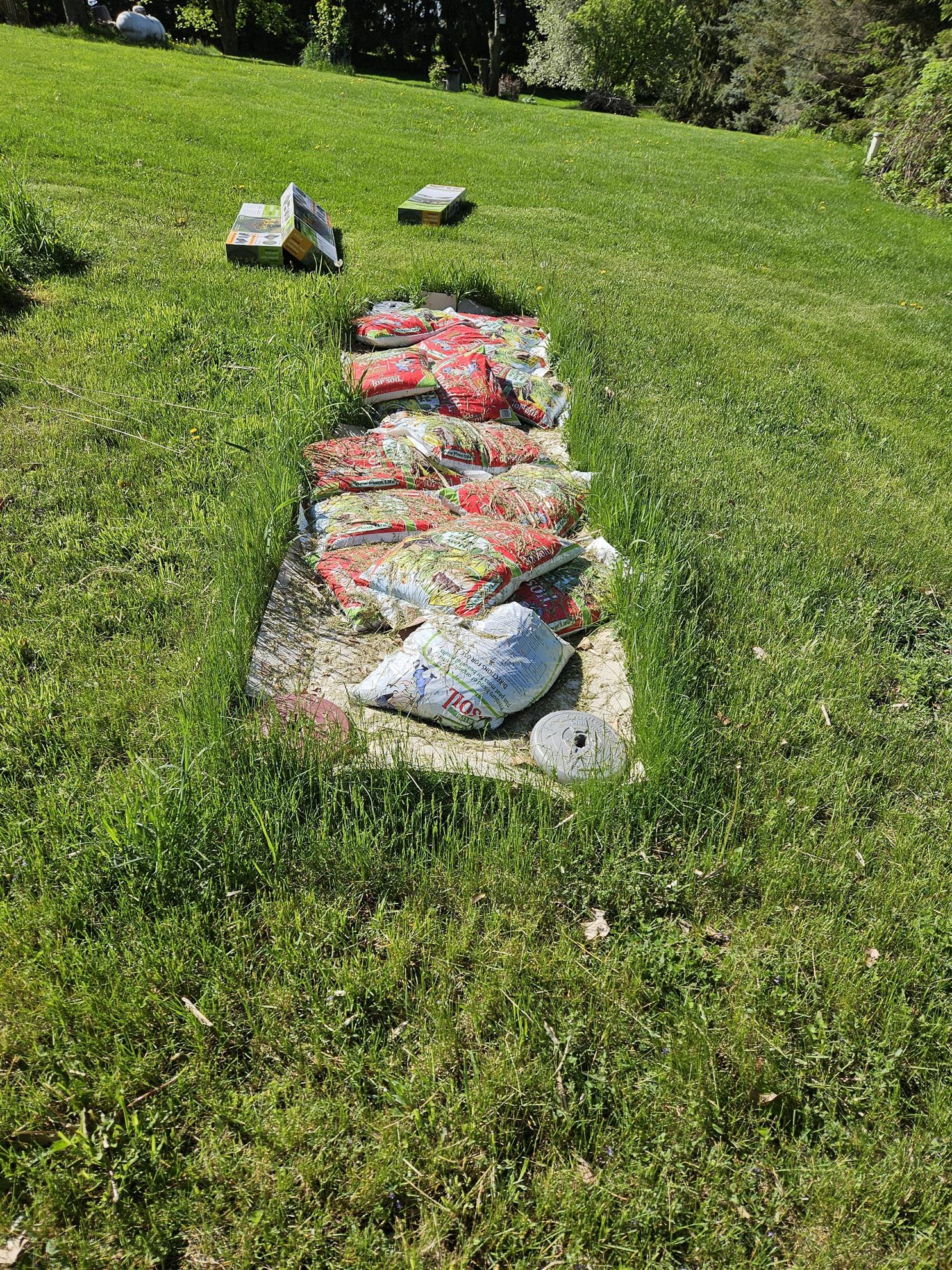
 In early May, Val installed two raised beds and filled them with native pollinating plants. We are documenting and sharing their growth. First, the area was cleared. Next, the boxes were assembled and filled with dirt. The abundance of rain this Spring has helped with keeping the soil moist. Then plants were added. The box on the left is mostly Ox-Eye Sunflower. The box on the right has Black Eyed Susan, Rattlesnake Master and Red Milkweed. Volunteer Lavender Hyssop is in both.
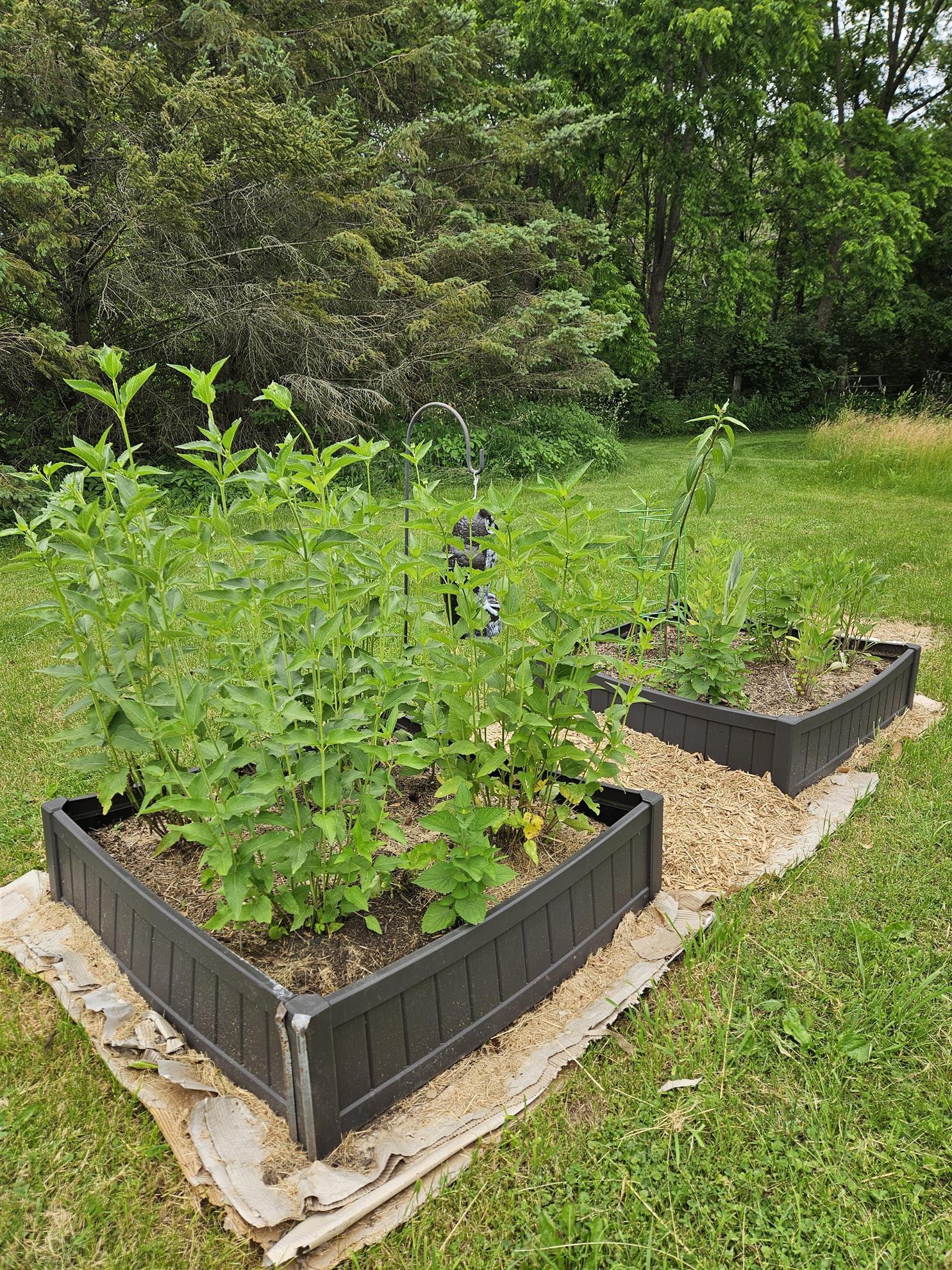
Now in mid-June everything is still growing like crazy. The Red Milkweed is getting ready to bloom.
Click on the Read more... box to see the Pollinator Resolution, and look for another article about other pollinators in our yards. Changemakers - submit your photos to wac7158@gmail.com!
Pollinator Resolution
The undersigned recognize the critical importance of pollinator habitat both restored and maintained on public and private lands, particularly found within our geographic area. Through collaboration and outreach resulting from this Pollinator Resolution, an interconnected mosaic of pollinator habitat will be developed to help restore and maintain populations of pollinator species throughout this region.
- WHEREAS, pollinators include butterflies, bees, some birds, bats, and other insects that play a crucial role in flowering plant reproduction, and
- WHEREAS, three-fourths of the world’s flowering plants and 35% of the world’s food crops depend on pollination to be successful, and
- WHEREAS, given the breadth, severity, and persistence of pollinator losses it is critical to expand efforts to reverse these losses and restore populations to healthy levels, and
- WHEREAS, an Operation Pollination goal is to increase pollinator habitat throughout the world, and
- WHEREAS, the leadership and impact of Rotarians volunteering to improve communities is a hallmark of Rotary International, and
- WHEREAS, the Environmental Sustainability Rotary Action Group (ESRAG) supports the goals of Operation Pollination, and
- WHEREAS, working together, we can increase capacity to reach out to organizations and individuals throughout our region with information and education about pollinators and their need for protection,
THEREFORE, we declare that it is our goal to support the goals of Operation Pollination, and to collaboratively and strategically protect and enhance pollinator species and their habitat on public and private lands throughout our geographic area.
Operation Pollination Goals
- Increase and improve pollinator habitat by identifying existing pockets of pollinator habitat and helping develop a nectar corridor for migratory and non-migratory pollinator species.
- Develop strategic partnerships for improving or creating habitat for pollinators and providing educational opportunities.
- Encourage action through voluntary, collaborative, and locally led conservation actions such as planting pollinator gardens, building bee blocks and avoiding or limiting pesticide use.
- Provide education to those interested in increasing their knowledge of pollinators and improving pollinator habitat.
- Promote citizen science opportunities to track key pollinator species populations and share research and resources about restoring pollinator habitat.